Hagia Sophia: Where Empires Converge and History Whispers
Step into the monumental Hagia Sophia, a structure that has witnessed 1,500 years of history unfold. Conceived by Emperor Justinian I in 537 AD, it served as the greatest cathedral in Christendom before its transformation into an imperial mosque by Mehmed the Conqueror. Later a museum, now a mosque again, this architectural marvel continues to stand as a testament to human ingenuity and enduring faith in Istanbul.
🎧 20-Second Audio Guide Preview
“Welcome to Hagia Sophia, where history breathes. Stand beneath the colossal dome, seemingly suspended from heaven. Look closely at the Imperial Gate, rumored to be Noah's Ark timber. Notice the Mihrab's subtle shift, aligning ancient faith with new. Discover secrets hidden for centuries. What stories will you uncover?”
From Imperial Cathedral to Ottoman Mosque: A Living Timeline
Dedicated in 537 AD by Emperor Justinian I, Hagia Sophia was consecrated as the greatest cathedral in Christendom, a feat of engineering for its time. Following the Ottoman conquest of Constantinople in 1453, Mehmed the Conqueror transformed this grand edifice into an imperial mosque, adding minarets and other Islamic features. In 1935, it was designated a museum, preserving its dual legacy for global appreciation. Reverted to a mosque in 2020, Hagia Sophia continues its 1,500-year journey, steadfastly weathering earthquakes and the rise and fall of empires, a testament to its enduring historical and spiritual significance.
Whispers of Noah's Ark and Miraculous Tears
As you enter, stand before the majestic Imperial Gate, the largest door in the building. This 7-meter (23-foot) tall Byzantine marvel, dating to the 6th century, was exclusively reserved for the Emperor. Legend claims its heavy bronze-bound oak doors were crafted from the timber of Noah's Ark itself, carried to Constantinople from Mount Ararat. Nearby, discover the Weeping Column, also known as the Sweating Column. Made of porous marble, it draws moisture from underground cisterns. For centuries, pilgrims have touched its brass plate, believing the dampness to be holy tears, offering good luck or miraculous healing for ailments.
Sacred Art, Divine Angles, and Uncovered Angels
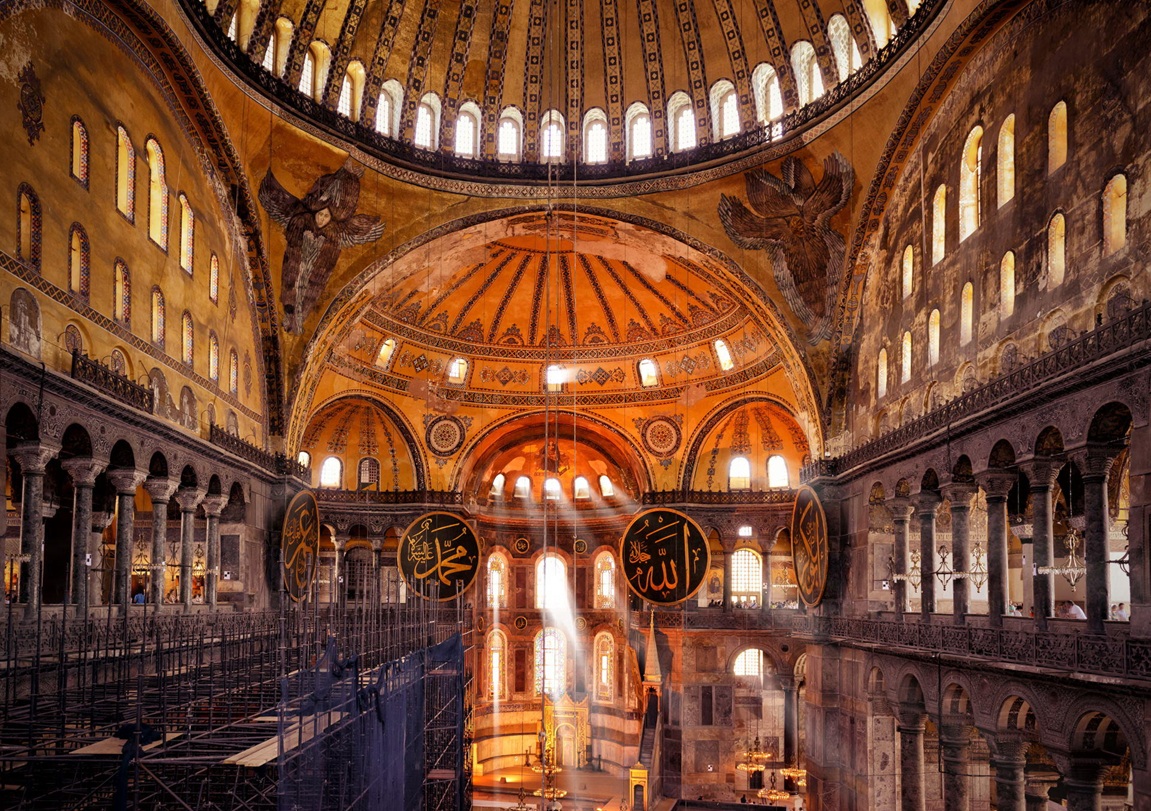
Look up at the Great Dome, roughly 31 meters (102 feet) in diameter and peaking at 55 meters (180 feet) above the floor. The 6th-century historian Procopius famously wrote it seemed suspended from heaven. Notice the Mihrab (prayer niche), visibly built slightly off-center to the right inside the ancient Christian apse. This subtle alignment was crucial for Muslim prayers to correctly face Mecca. On the pendentives, observe the Seraphim Angels, six-winged beings. Their faces were covered during the Ottoman era, but restorers in 2009 uncovered one remarkably preserved mosaic face, bringing ancient art back into view. Don't miss the 1261 AD Deesis Mosaic, celebrating the end of Crusader occupation, depicting Christ flanked by the Virgin Mary and John the Baptist, a pinnacle of Byzantine art foreshadowing the Renaissance.
Ready to Explore Istanbul?
Download the Istanbul Smart Guide now and transform your travel experience
Follow these stops in the Istanbul Smart Guide mobile app with offline GPS & interactive AI.
1
Welcome to the Great Church and Mosque
📍 Outer Courtyard, approaching the main entrance.
A brief welcome and introduction to the tour.
2
The Imperial Gate
📍 Inside the inner narthex, before the central doors.
The largest door in the building, said to be made of wood from Noah's Ark, reserved only for the Emperor.
3
The Weeping Column
📍 Ground floor, northwest aisle.
The Wishing Column covered in copper plates, famous for its dampness and legends of miraculous healing.
4
The Great Dome
📍 Standing directly in the center of the nave under the dome.
Looking up at the massive dome that seemed to hang from heaven by a golden chain.
5
The Mihrab and Minbar
📍 Facing the apse at the front of the nave.
The transition to a mosque: The slight off-center alignment of the Mihrab pointing to Mecca inside the Christian apse.
6
The Seraphim Angels
📍 Looking up at the four corners at the base of the dome.
The six-winged angels guarding the throne of God, and the face uncovered during modern restorations.
7
The Deesis Mosaic
📍 Upper galleries (or described from the ground if closed).
The pinnacle of Byzantine art showing Christ flanked by the Virgin Mary and John the Baptist.
Frequently Asked Questions
When was Hagia Sophia built and what is its significance?
Hagia Sophia was dedicated in 537 AD by Emperor Justinian I, initially as the greatest cathedral in Christendom. It was transformed into an imperial mosque in 1453, later a museum, and reverted to a mosque in 2020. It stands as a symbol of architectural endurance and religious transformation over 1,500 years.
What is the story behind the Imperial Gate?
The Imperial Gate, standing 7 meters (23 feet) tall, was the central entrance strictly reserved for the Emperor and his personal retinue. Byzantine legend claims its heavy bronze-bound oak doors were crafted from the timber of Noah's Ark, brought to Constantinople from Mount Ararat.
Can the Hagia Sophia audio guide highlight specific art details?
Yes, the audio guide will direct your attention to magnificent details like the uncovered Seraphim Angel mosaics and the exquisite 1261 AD Deesis Mosaic, explaining their historical and artistic context and significance within Hagia Sophia's layered history.
How does the Mihrab's placement reflect Hagia Sophia's history?
The Mihrab is visibly off-center because the original Christian basilica was built facing East toward Jerusalem. However, Islamic prayer requires facing the Kaaba in Mecca (the Qibla), which is slightly southeast of Istanbul. This subtle shift showcases its transition into an imperial mosque.