Hagia Sophia: The Impossible Building and Its Miraculous Floating Dome
Step back to 532 AD, when Emperor Justinian envisioned a church unlike any other. He tasked two brilliant mathematicians, not traditional architects, with an impossible challenge: construct the world's largest dome in just five years. The result, Hagia Sophia, stands as a testament to their genius, its colossal dome seemingly defying gravity, an architectural marvel that reshaped history and still captivates us today.
🎧 20-Second Audio Guide Preview
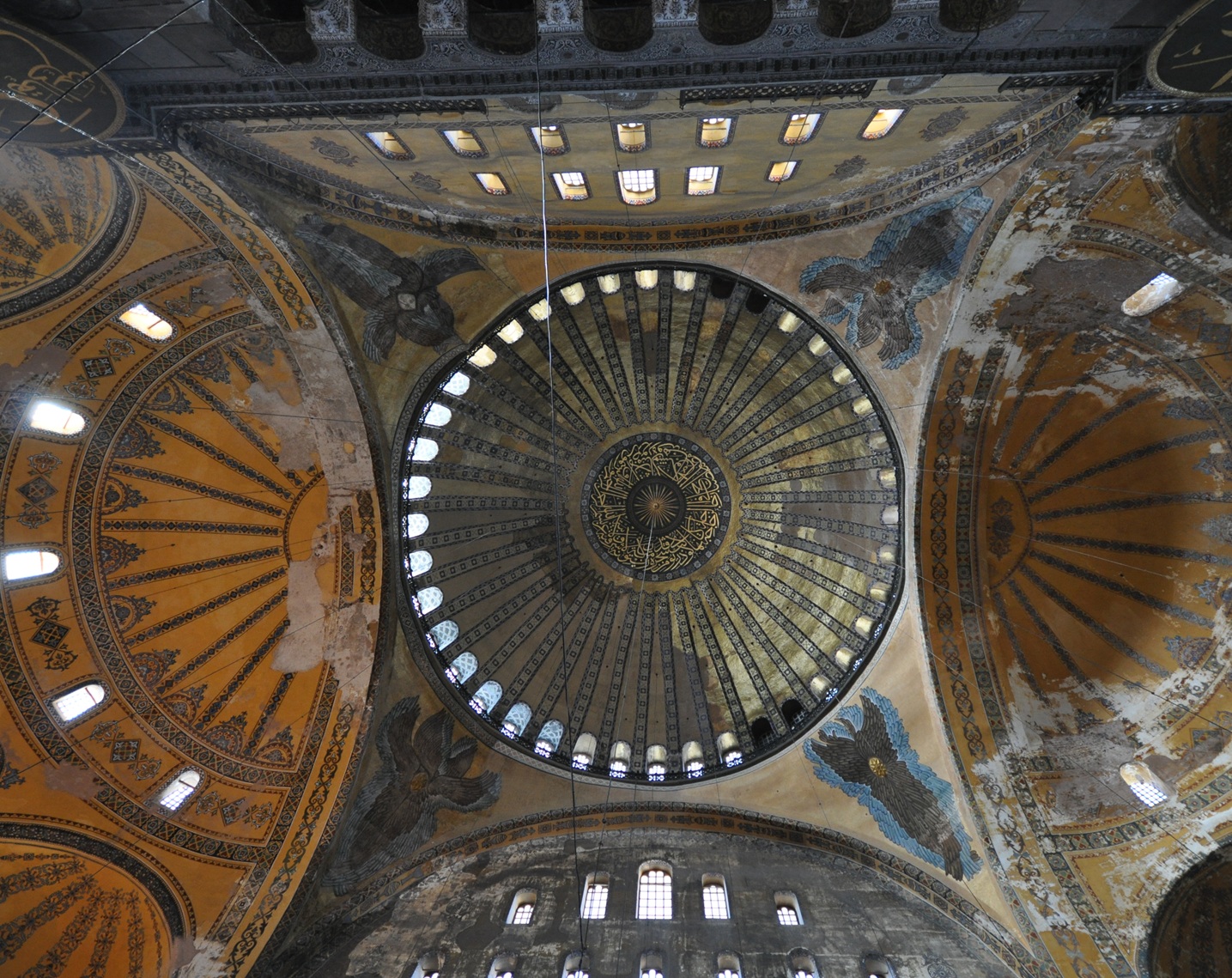
“Stand beneath this colossal dome. Look closely at the base, where 40 arched windows create a breathtaking optical illusion. When sunlight pours through, the thousands of tons of masonry above seem to miraculously float on a ring of pure light. How did ancient builders achieve such a feat?”
Justinian's Impossible Vision: Defying Gravity with Geometry
Emperor Justinian, after the devastating Nika Riots of 532 AD, commanded a monument of unprecedented scale for Constantinople. Rejecting conventional architects, he entrusted two brilliant mathematicians, Anthemius of Tralles and Isidore of Miletus, with a seemingly impossible task: to build the grandest church in just five years. Their challenge was formidable – how to place an enormous circular dome atop a square base, creating an interior space unlike anything the world had ever witnessed. Their ingenious solution, rooted in advanced geometry, resulted in Hagia Sophia, a building whose central space remained the largest in the world for nearly a millennium, showcasing a profound leap in architectural ambition.
Byzantine Engineering: Pendentives and Colossal Columns
At the heart of Hagia Sophia's structural genius are the pendentives. Observe the four massive curved, spherical triangles at the corners, beneath the dome, where the Seraphim angels are painted. This 6th-century Byzantine innovation elegantly resolved the challenge of transitioning from a square room to a circular dome. Unlike earlier domes placed on circular walls, pendentives efficiently transfer the immense outward thrust of the dome downwards into four colossal supporting piers. This allowed the intervening wall sections to be opened with windows, flooding the interior with light. Complementing this, 104 colossal columns, including green marble from the Temple of Artemis and deep red porphyry from Egypt, stand up to 20 meters tall, showcasing extraordinary Roman logistical and engineering prowess in their transportation and erection.
The Ring of Light and Sinan's Enduring Legacy
The most captivating visual effect of Hagia Sophia's dome is arguably the "Ring of Light." The dome's base is ingeniously pierced by 40 arched windows, which not only reduce the dome's dead weight and distribute pressure but also create a breathtaking optical illusion. When sunlight streams through these gold-leafed windows, the intervening stone arches seem to vanish, making the massive dome appear to float miraculously above. However, the sheer size and weight of this shallow dome inherently strained the structure, leading to centuries of warping and leaning. It was the legendary Ottoman architect Mimar Sinan who, in the 1570s, added the immense exterior buttresses, effectively clamping the building and preserving this unparalleled marvel for future generations.
Ready to Explore Istanbul?
Download the Istanbul Smart Guide now and transform your travel experience
Follow these stops in the Istanbul Smart Guide mobile app with offline GPS & interactive AI.
1
Welcome to the Impossible Building
📍 Outer Courtyard.
A brief welcome and introduction to the tour.
2
The Justinian Blueprint
📍 Inner Narthex.
How Isidoros and Anthemius defied gravity using geometry to construct the largest interior space in the world in 537 AD.
3
The Pendentives
📍 Center of the nave, looking up at the corners of the dome.
The revolutionary architectural trick of using spherical triangles (pendentives) to place a massive circular dome on a square room.
4
The Monolithic Columns
📍 Main nave, observing the green and red pillars.
The logistics of transporting colossal single-piece porphyry columns from Egypt and Ephesus to support the galleries.
5
The Buttresses of Sinan
📍 Main nave, looking toward the thick exterior walls.
How the legendary Ottoman architect Mimar Sinan reinforced the crumbling walls from the outside centuries later, saving the structure.
6
The Ring of Light
📍 Center of the nave, looking directly at the base of the dome.
The 40 windows at the base of the dome that distribute weight and create the optical illusion that the dome floats on a ring of light.
Frequently Asked Questions
How was Hagia Sophia's dome built without collapsing?
It was built using revolutionary 6th-century Byzantine innovations like pendentives, which allowed a massive circular dome to sit on a square base, transferring weight to four huge piers.
What is the "Ring of Light" in Hagia Sophia?
The "Ring of Light" refers to the optical illusion created by 40 windows at the dome's base. When sunlight enters, the dome appears to float due to the seemingly disappearing stone arches.
Who were the architects of Hagia Sophia's dome?
Emperor Justinian commissioned two brilliant mathematicians, Anthemius of Tralles and Isidore of Miletus, in 532 AD to design and construct the dome and the entire church.
How does the audio guide enhance my visit to Hagia Sophia?
Our audio guide provides historical context and engineering insights for each marvel, from the pendentives to Sinan's buttresses, bringing the story of the "Floating Dome" to life as you explore.