Unleash Ancient Legends: Heroes, Gods, and Monsters Await!
Step into a world where ancient myths breathe life into stone and clay. The Istanbul Archaeological Museum holds secrets of gods, formidable beasts, and legendary heroes. Prepare for an epic scavenger hunt, tracing the footsteps of civilizations that believed in sphinxes guarding gates, dragons prowling temples, and the protective gaze of Gorgons. Our audio guide transforms your visit into an immersive quest through history.
🎧 20-Second Audio Guide Preview
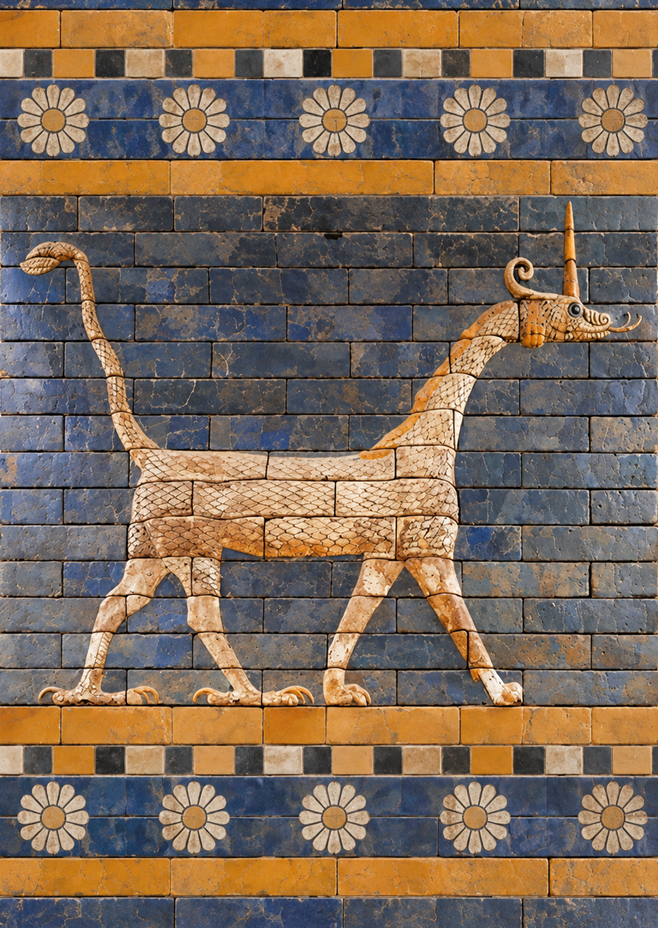
“Welcome, adventurers! Stand before the mighty Mushkhushu Dragon. Look closely for its scaly snake head, lion front legs, and eagle talons. This mythical beast was the loyal pet of the storm god, Marduk. What ancient secrets does its composite form truly guard?”
The Lair of Mythical Beasts: Sphinxes and Dragons
Your journey begins amongst creatures of legend. Encounter the majestic Hittite Sphinx from Yerkapı in Hattusa, dating back to the 14th Century BC. With a lion's body and human head, this guardian, heavily influenced by Egyptian art, would famously challenge travelers with impossible riddles at city gates. Next, gaze upon the formidable Mushkhushu Dragon from Babylon, 575 BC. A mesmerizing blend of a scaly snake's body and head, lion's front legs, eagle's talons, and a long, stinging tail, this legendary Mesopotamian beast was the revered companion of the storm god, Marduk. Unravel the mysteries behind these hybrid monsters and their symbolic roles in ancient civilizations.
Royal Rites and Heroic Valor: From Grief to Glory
Delve into the poignant and dramatic narratives of ancient royalty. Stand before the Sarcophagus of Crying Women, a marble masterpiece from the Sidon Necropolis (c. 350 BC). This exquisite tomb, resembling a miniature Greek temple, features eighteen uniquely carved women, each expressing a different pose of sorrow, made for King Straton I of Sidon. Contrast this scene of solemn mourning with the thrilling depiction of The Lion Hunt, found on a side of the renowned Alexander Sarcophagus from Sidon (c. 312 BC). Witness Alexander the Great on horseback, alongside Persian soldiers, in a dramatic struggle against a ferocious lion—a powerful testament to ancient kings' bravery and leadership.
Deities of Water and Amulets of Protection
Explore how ancient peoples personified natural forces and sought protection from the unseen. Observe the monumental Statue of Oceanus, or a River God, unearthed from Ephesus, dating to the 2nd Century AD. Ancient Greeks and Romans believed rivers possessed spirits, and this massive figure with its long, flowing beard and relaxed posture beautifully embodies the calm, ceaseless flow of water. Finally, discover the enigmatic Medusa Head. Carved during the Roman Era and found hidden in various stones throughout the museum courtyard, Medusa, the Gorgon with living snakes for hair, was said to turn onlookers to stone. Romans often displayed her image on buildings, not as a symbol of fear, but as a potent magic shield to ward off misfortune and evil.
Ready to Explore Istanbul?
Download the Istanbul Smart Guide now and transform your travel experience
Follow these stops in the Istanbul Smart Guide mobile app with offline GPS & interactive AI.
1
Welcome Adventurers
📍 Museum Entrance Courtyard.
A brief welcome and introduction to the tour.
2
The Hittite Sphinx
📍 Ancient Orient Building, near the entrance.
What is a Sphinx? A gamified look at hybrid monsters.
3
The Mushkhushu Dragon
📍 Ancient Orient Building, Ishtar Gate panels.
Decoding the mythical beast of Babylon made of snake, lion, and eagle parts.
4
Sarcophagus of Crying Women
📍 Main Building, ground floor, Hall of Sarcophagi.
Counting the 18 weeping women and guessing who they were crying for.
5
The Lion Hunt
📍 Main Building, ground floor, Alexander Sarcophagus (Side Panel).
A dramatic breakdown of the ancient Macedonian royal lion hunt.
6
Statue of Oceanus / River God
📍 Main Building, ground floor, Classical galleries.
How ancient people imagined rivers and oceans as giant, bearded men.
7
The Medusa Head
📍 Museum Courtyard, open-air lapidary garden.
The legend of Medusa’s gaze and finding her face hidden in the stones.
Frequently Asked Questions
What mythical creatures will I find in the Istanbul Archaeological Museum?
You'll encounter the Egyptian-influenced Hittite Sphinx, the multi-part Mushkhushu Dragon of Babylon, and the legendary Medusa Head, among other fascinating figures representing ancient gods and heroes.
What is the historical significance of the Sarcophagus of Crying Women?
The Sarcophagus of Crying Women, dating to c. 350 BC, was crafted for King Straton I of Sidon. Its 18 unique weeping female figures offer a rare glimpse into ancient funerary rituals and artistic expressions of grief.
How did ancient kings prove their bravery, as seen in the museum?
The Alexander Sarcophagus vividly depicts a royal lion hunt, showcasing Alexander the Great and Persian soldiers fighting a formidable lion. Hunting such dangerous beasts was considered the ultimate test of courage and skill for ancient monarchs.
How does this audio tour enhance my visit to the museum?
Our audio tour acts as your personal historian and guide, telling immersive stories and pointing out key details at each stop. It transforms your visit into an engaging scavenger hunt for mythical beasts and ancient heroes, providing context and fascinating facts.