Architectural Marvels: Iron Churches to Red Castles
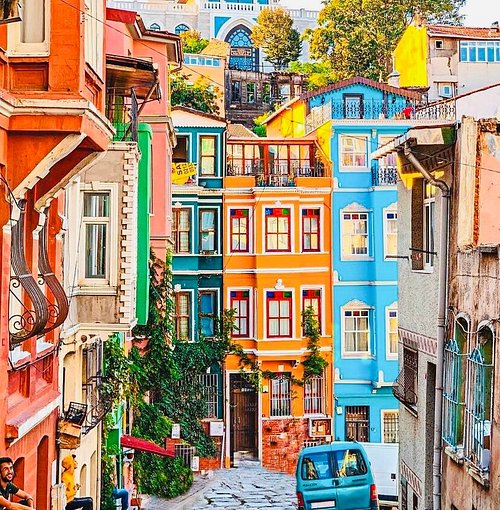
Fener and Balat unveil an astonishing array of architectural innovation and defiant grandeur. Stand before the Bulgarian Iron Church, a magnificent structure from 1898, entirely crafted from 500 tons of prefabricated cast iron in Vienna, then floated down the Danube and bolted together on site. This engineering marvel symbolizes 19th-century Bulgarian autonomy. Looming over Fener is the colossal Red School, built in 1881 with imported French bricks. Its castle-like scale was a deliberate display of the immense wealth and cultural power of the Greek mercantile elite. Then, wander Merdivenli Yokuş, a charming stepped street lined with vividly painted 19th-century wooden bay-window houses, historically adapted for light and space by working-class families. Each structure tells a unique story of resilience and identity.
Echoes of Faith: Synagogues, Patriarchs, and Unconverted Churches
These ancient districts cradle profound religious and commercial histories. The Ecumenical Patriarchate, the global spiritual heart for 300 million Orthodox Christians, has endured in Fener since 1453, its walled complex a testament to resilience. Nearby, the Ahrida Synagogue, pre-dating the Ottoman conquest, stands as the oldest surviving synagogue, a sanctuary for Sephardic Jews fleeing the Spanish Inquisition, its bimah said to resemble Noah's Ark. Uniquely, the 13th-century 'Bloody Church,' St. Mary of the Mongols, stands as Istanbul's only Byzantine church never converted into a mosque, protected by a special royal decree. Adjacent, Çıfıt Çarşısı, the historic Jewish market street, once pulsed with Ladino, forming Balat's vibrant commercial artery.
Golden Horn Narratives: From Byzantine Masterpieces to Tavern Tales
Beyond its streets, Fener and Balat reveal artistic pinnacles and vibrant social scenes. The Chora Church houses the absolute zenith of Late Byzantine art, featuring breathtaking 14th-century mosaics and the profound Anastasis fresco, where Christ dynamically pulls Adam and Eve from tombs. This artistry represents a desperate renaissance of a dying empire. Explore the echoes of Agora Meyhanesi, where Greek and Armenian taverns once thrived, fostering cross-cultural camaraderie over rakı and melancholic songs. Down by the water, the crumbling Phanariot Mansions recall the elite Greek nobility who shaped Ottoman foreign policy. Conclude at Fener Pier, gazing upon the Golden Horn—strategic waters that protected empires and now reflect centuries of Istanbul’s diverse heritage.