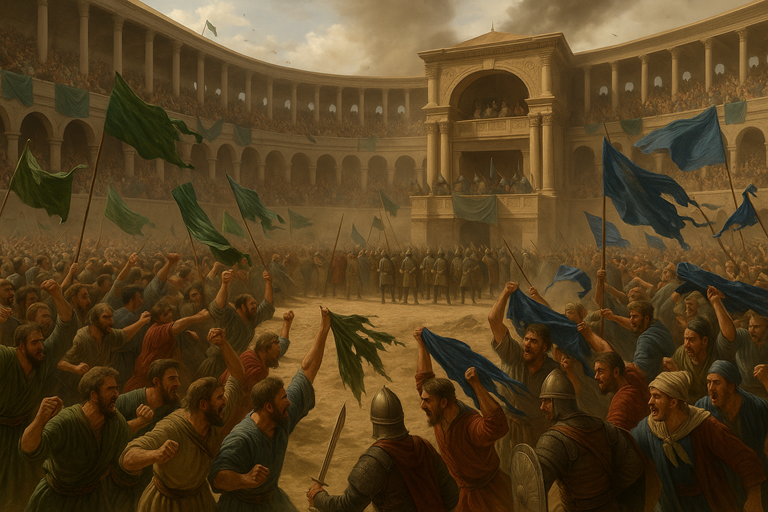
From Milion Stone to Nika Riots: Birth of a New Rome
Begin your journey at the Milion Stone, the Byzantine Empire's 'Zero Mile' marker, once considered the center of the world. From here, our path traces the foundational violence that shaped Constantinople. Stand before the colossal exterior of Hagia Sophia, not merely a church, but a symbol of imperial dominance. This magnificent structure rose from the ashes of the 532 AD Nika Riots, a city-wide rebellion that saw the previous basilica burned to the ground. Emperor Justinian, asserting his absolute divine power, ordered the slaughter of 30,000 rebels in the nearby Hippodrome, then erected this gravity-defying dome in just five years to crush the spirit of the surviving populace, proving his unchallenged authority.
Whispers of Power: Obelisks, Conspiracies, and Betrayals
As you traverse the ancient core, confront monuments laden with imperial intrigue. Look up at the Obelisk of Theodosius, a 3,500-year-old Egyptian monolith, its marble base depicting Emperor Theodosius watching chariot races from his 'Kathisma,' a heavily guarded imperial box designed to protect him from the volatile mob. Nearby, the Serpent Column, a relic forged from melted Persian weapons after the Greek victory at Plataea, stands as the city's oldest and most battle-scarred monument, its snake heads long since vandalized. Gaze upon the Walled Obelisk, once gleaming with golden-bronze plaques, which were mercilessly stripped by fellow Christian knights during the devastating Fourth Crusade of 1204, a brutal act that crippled Byzantium. Finally, contemplate the tragic tale of Ibrahim Pasha Palace, where Sultan Suleiman the Magnificent's best friend and Grand Vizier was brutally assassinated, a victim of paranoia and political machination.
Ottoman Majesty: From Transition to Architectural Rivalry
Witness the definitive transition from Byzantine roar to Ottoman might at the Firuz Ağa Mosque, a modest 1491 structure marking the permanent shift in city administration. Conclude your journey at the exterior of the Blue Mosque, built over a millennium after Hagia Sophia. This grand mosque, completed in 1616 by Sultan Ahmed I, stands as a direct architectural response, a bold attempt to match and even surpass Hagia Sophia's enduring legacy. Its revolutionary dome structure became the fundamental blueprint for almost all imperial Ottoman mosques. Notice its six towering minarets; this caused a massive religious scandal upon its completion, as only Mecca then possessed six. Sultan Ahmed I was ultimately compelled to fund a seventh minaret in Mecca to resolve the widespread religious controversy.