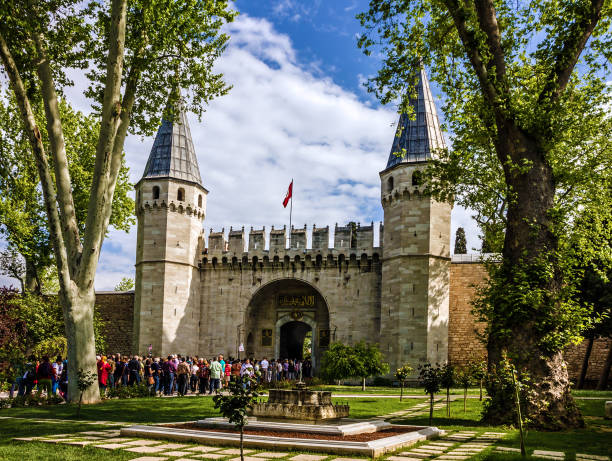
The Palace of Tears: Unveiling Topkapı's Deadly Outer Courtyards
Step into the shadowed realm of Topkapı Palace's free outer courtyards, a landscape etched with imperial intrigue and chilling power. Beyond the ticketed entrances, the true, terrifying politics of the Ottoman Empire unfolded. Here, amidst ancient walls and whispered legends, discover the brutal laws, the ominous warnings, and the silent enforcers who shaped an empire. Prepare to unlock the dark secrets of Sultanahmet's imperial core.
🎧 20-Second Audio Guide Preview
“Welcome to the Palace of Tears. Stand before the mighty Imperial Gate. Look closely: severed heads were displayed here, a chilling warning. Now, imagine the Janissaries in their courtyard, their soup cauldrons ringing. Notice the Executioner's Fountain, where silent assassins washed their blades. What horrifying secrets does this stone still hold?”
🗺️ Interactive Walking Route Map
Tap any numbered stop pin to preview its location & walking directions
The Imperial Gate & Hagia Irene: A Tale of Terror and Pragmatism
Beyond the initial threshold lies the Bab-ı Hümayun, or Imperial Gate, erected in 1478. This colossal entrance wasn't merely a boundary; it served as a terrifying psychological deterrent. Imagine the chilling spectacle: severed heads of traitors and corrupt officials, displayed on spikes or silver platters, a stark warning to all who entered the imperial domain, enforcing absolute obedience. Nearby, stands Hagia Irene, a Byzantine church predating Hagia Sophia from the 6th century. Remarkably, the Ottomans, with their keen pragmatic efficiency, chose not to convert this ancient basilica into a mosque. Instead, its vast, echoing interior found a new, strategic purpose: a heavily fortified weapons armory, supplying the formidable Janissaries with the tools of their power. This dual-use showcases the empire's strategic brilliance amidst its displays of brutal power.
Whispers of Rebellion: Janissaries, Silken Bowstrings, and Silent Assassins
The First Courtyard, known as the Court of the Janissaries, was the nerve center of the Sultan's elite slave-soldiers. These formidable infantrymen had a chilling method of signaling their discontent: overturning their massive bronze soup cauldrons. The resonant clang echoing across the courtyard was an unmistakable harbinger of an impending, bloody coup against the Sultan himself. Just before the Second Gate, find the dark, dripping Executioner's Fountain. Here, the Sultan’s deaf-mute assassins, chosen specifically for their inability to speak or hear their victims, would meticulously cleanse their hands and blades after carrying out secret executions of high-ranking officials. Further within the palace's shadow, tracing the Harem Walls reveals the horrifying Law of Fratricide, codified by Mehmed II. To prevent civil wars, any new Sultan was mandated to murder all his brothers, often strangled with silken bowstrings to avoid spilling royal blood.
Power, Paranoia, and Picturesque Alleys
Gaze up at the towering spire of the Tower of Justice, an architectural symbol of imperial omnipresence. From its secret, grated window, the Sultan could peer directly into the Imperial Council chamber below. This constant, unseen surveillance kept his viziers in a perpetual state of paranoid terror, ensuring absolute loyalty and diligence in governance. Venture then into Soğukçeşme Sokağı, a picturesque alley where beautifully restored 19th-century wooden Ottoman mansions lean directly against the formidable stone walls of Hagia Sophia and Topkapı Palace. This charming street offers a vivid contrast, illustrating the domestic, civilian life that flourished quietly in the imposing shadow of absolute imperial power. Concluding our journey, the Bab-ı Ali, or Sublime Porte, served as the actual governmental hub where the Grand Vizier administered the vast Ottoman Empire, conducting global diplomacy and plotting cutthroat political coups, a true epicenter of global power.
Ready to Explore Istanbul?
Download the Istanbul Smart Guide now and transform your travel experience
Conclude at sprawling gardens where fallen politicians were invited for a walk, only to be quietly strangled in the shadows.
Frequently Asked Questions
Is the 'Palace of Tears' tour within Topkapı Palace's ticketed area?
This specific audio tour focuses on the free, deadly outer courtyards of Topkapı Palace, which do not require a ticket. You will explore areas like the Imperial Gate and the Court of the Janissaries without entry fees.
What was the purpose of the Executioner's Fountain at Topkapı Palace?
The Executioner's Fountain was where the Sultan's deaf-mute assassins would wash blood from their hands and blades after carrying out secret executions of high-ranking officials within the palace.
How did the Janissaries signal their rebellion at Topkapı Palace?
The Janissaries, the Sultan's elite infantry, would signal their unhappiness or an impending coup by angrily overturning their massive bronze soup cauldrons, the ringing sound announcing their revolt.
Can I use this audio tour offline once I've downloaded it?
Yes, once you download the 'Palace of Tears' audio tour within the Istanbul Audio Guide app, you can enjoy it completely offline without needing an internet connection.