Descend into Darkness: The Basilica Cistern's Violent Birth and Forgotten Centuries
Step beneath the vibrant streets of Istanbul and enter the hushed, cavernous world of the Basilica Cistern. This architectural marvel, beautiful yet foreboding, hides a brutal origin. Built upon the ashes of a devastating riot and forged by the hands of thousands of enslaved laborers, it stands as a testament to both imperial power and profound human suffering. Prepare to journey into its depths.
🎧 20-Second Audio Guide Preview
“Stand beneath these ancient arches. Look closely at the columns: see the scavenged Corinthian and Ionic capitals? They whisper tales of looted pagan temples. Now, notice the damp, cool air—imagine 7,000 enslaved souls toiling here. This isn't just water storage; it's a monument to empire, built from riot and sacrifice. But why is Medusa upside down?”
The Bloody Foundations of Justinian's Masterpiece
The Basilica Cistern's serene beauty belies its violent genesis. Before its construction, a grand public basilica occupied this very spot. In 532 AD, Constantinople was engulfed by the devastating Nika Riots, a chariot-racing dispute that escalated into a city-wide conflagration, burning half of the capital to the ground. Emperor Justinian, nearly overthrown, unleashed his general Belisarius, who orchestrated the slaughter of 30,000 rioters in the nearby Hippodrome. It was upon the blood-soaked ashes of this massacre that Justinian commanded the building of this monumental cistern, alongside the new Hagia Sophia, transforming ruin into a symbol of renewed imperial power and control.
A Graveyard of Gods: Spolia and the Slaves' Toll
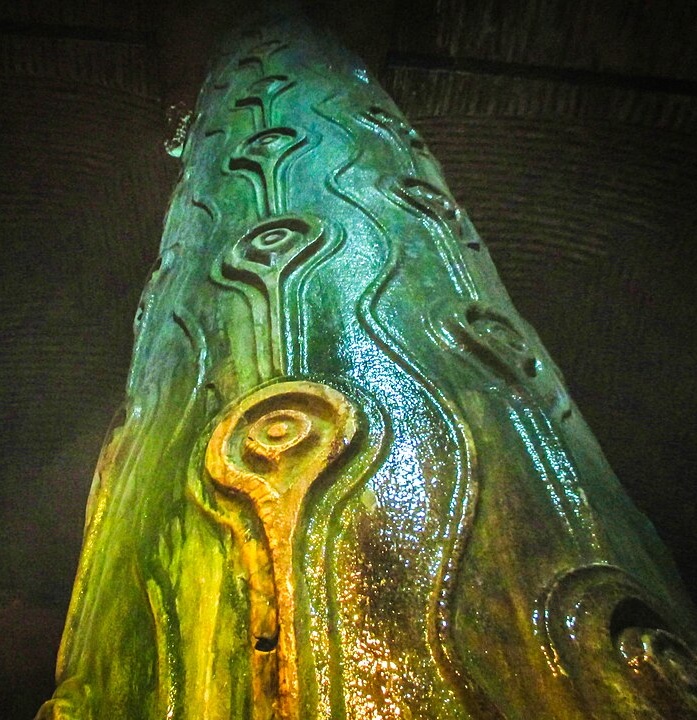
As you gaze upon the 336 columns supporting this vast underground chamber, observe their diverse styles. Many are ornate Corinthian, with their distinctive acanthus leaves, while others feature the simpler, elegant scrolls of the Ionic order. These columns were not newly carved for the cistern but were 'spolia'—looted architectural fragments salvaged from ruined pagan temples across the empire, a testament to the urgent, expedient nature of its construction. This rapid undertaking came at an immense human cost. Historical accounts reveal that Emperor Justinian compelled over 7,000 enslaved individuals and prisoners of war to endure dangerous, damp, and dark conditions, digging the massive excavation and constructing the intricate brickwork. The 'Crying Column,' perpetually moist, is often viewed as a poignant, silent memorial to those who perished in its making.
Medusa, Monotheism, and the Forgotten Giant
The infamous Medusa heads, repurposed as column bases, offer a profound symbolic statement. Medusa, a powerful and terrifying figure from pre-Christian mythology, represented the very essence of the old Greek and Roman pagan religions. Deliberately placing her face-down, submerged in the murky utility waters of a Christian empire's infrastructure, was a potent theological victory for Byzantium, visually declaring the subjugation and death of the old gods. Centuries later, after the Ottoman conquest in 1453, the cistern's existence faded from imperial memory. Preferring fresh running water, the Ottomans developed new systems, leaving this colossal underground marvel to be forgotten. For nearly a century, only locals living directly above knew, quietly fishing from holes in their floors, until the French scholar Petrus Gyllius rediscovered and documented its awe-inspiring presence around 1545, bringing it back into the light of history.
Ready to Explore Istanbul?
Download the Istanbul Smart Guide now and transform your travel experience
Follow these stops in the Istanbul Smart Guide mobile app with offline GPS & interactive AI.
1
Welcome to the Shadows
📍 Above ground, before the stairs.
A brief welcome and introduction to the tour.
2
The Ashes of the Nika Riots
📍 The entrance platform.
The dark history behind the construction: Built on the ashes of a riot that nearly destroyed Emperor Justinian.
3
The Looted Temples
📍 Early walkway, looking at the mismatched column capitals.
A masterclass in spolia (recycled stone). Identifying Ionic vs. Corinthian capitals ripped from destroyed pagan temples across the empire.
4
The Slaves' Toll
📍 The Crying Column.
The human cost. Exploring the lives of the 7,000 prisoners of war and slaves forced to build the cistern in the damp dark.
5
The Subjugation of the Old Gods
📍 The Medusa Heads.
A theological deep dive: Why placing a powerful pagan god face-down in the mud was a deliberate statement of Christian Byzantine dominance.
6
The Forgotten Century
📍 The return walkway/exit.
How the Ottomans completely forgot the cistern existed until a French scholar (Petrus Gyllius) found locals pulling up buckets of fish from holes in their floors.
Frequently Asked Questions
What are the visiting hours for the Basilica Cistern?
The Basilica Cistern's visiting hours vary seasonally. It is generally open daily from early morning until late evening, but it is always best to check the official website or a reliable local source for the most current times before your visit.
What is the significance of the Medusa heads in the Basilica Cistern?
The Medusa heads, salvaged from a pagan temple, were deliberately placed upside down or sideways as column bases. This was a powerful symbolic act by the Christian Byzantine Empire to visually demonstrate the subjugation and demise of the old Greek and Roman pagan gods.
How does the Istanbul Audio Guide enhance my Basilica Cistern visit?
Our audio guide provides deep historical context for each section of the Basilica Cistern, narrating the stories behind its construction, the Nika Riots, the repurposed columns, and the symbolic meanings of elements like the Medusa heads, offering insights you might otherwise miss.
What caused the devastating Nika Riots that preceded the cistern's construction?
The Nika Riots of 532 AD began as a dispute between rival chariot racing factions, the Blues and the Greens, in Constantinople. These minor grievances rapidly escalated into a massive public uprising against Emperor Justinian, leading to widespread destruction and immense loss of life.