









Walk the Imperial Path: Decode Hagia Sophia's Mosaics and Monarchs

Walk the Imperial Path: Decode Hagia Sophia's Mosaics and Monarchs

Step into Hagia Sophia, where every mosaic and marble pattern tells a tale of power, faith, and survival. Our audio guide invites you to decode the political propaganda, royal intrigues, and exquisite craftsmanship embedded in this monumental basilica. From empress's desperate measures to Viking graffiti, uncover the hidden layers of history that shaped empires and left an indelible mark on the 'Throne of the World'.

🎧 20-Second Audio Guide Preview

“Stand on the Omphalion, where Byzantine Emperors were crowned as God's representatives. Look closely at the Empress Zoe mosaic – notice the changed face, a story of survival. And seek the faint Viking runes, a human mark left by a mercenary. What other secrets hide in these ancient walls?”

Imperial Statements: Power & Divinity in Golden Mosaics

Discover how Hagia Sophia served as a grand stage for imperial propaganda. The 10th-century Narthex mosaic, created during Basil II's reign, vividly depicts Emperor Constantine the Great offering the city walls and Emperor Justinian presenting Hagia Sophia itself to the Virgin Mary. This visual statement conveyed an unbroken, divine legacy to all who entered. Just beyond, stand before the 11th-century Omphalion, a meticulously designed square of polished marble circles. This 'Navel of the World' marked the precise spot where Byzantine Emperors were crowned by the Patriarch, signifying their divine appointment as God's representative on Earth.

Empress Zoe's Resilience & Viking Traces

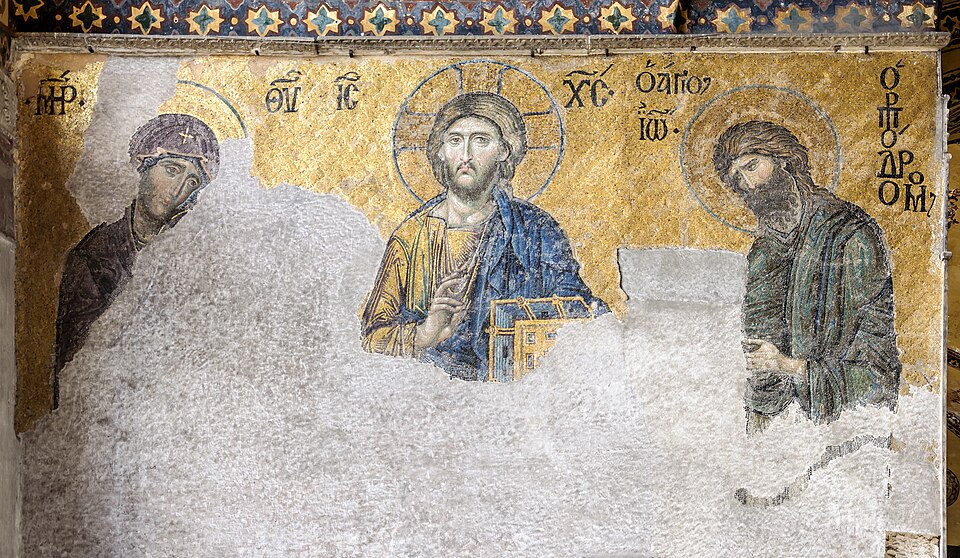
Unravel the intriguing story of Empress Zoe through her 11th-century mosaic. As the true bloodline heir, Zoe secured her power by marrying three different emperors: Romanos III, Michael IV, and Constantine IX. Due to the immense cost of mosaic work, royal artisans simply chipped out and replaced the faces and names of her deceased or exiled husbands, reflecting her remarkable political survival. Further within, look for the faint 9th-century runic carving. This 'Viking Inscription' on a marble balustrade, translating to 'Halfdan carved these runes,' is a rare, humanizing relic left by the Varangian Guard, the axe-wielding Norse and Rus mercenaries loyal only to the Emperor's gold.

A Grand Restoration: Ottoman Calligraphy & Preservation

Witness the legacy of a monumental 19th-century restoration. Between 1847 and 1849, Sultan Abdulmecid I commissioned the Swiss-Italian Fossati brothers to save the crumbling Hagia Sophia. Their work stabilized the dome and updated the interior, preserving the building for future generations. As part of this extensive project, master calligrapher Kazasker Mustafa Izzet Efendi was commissioned to create eight colossal wooden roundels. Each measuring 7.5 meters wide, these magnificent calligraphic panels bear the names of Allah, Muhammad, the first four Caliphs, and the Prophet's grandsons, standing today as the largest Islamic calligraphic panels in the world and a testament to the building's rich, layered history.

Istanbul Smart Guide

Ready to Explore Istanbul?

Download the Istanbul Smart Guide now and transform your travel experience

✨ Explore All App Features

Tour Route & Historical Stops (6)

Follow these stops in the Istanbul Smart Guide mobile app with offline GPS & interactive AI.

1

Welcome to the Throne of the World

📍 Outer Courtyard.

A brief welcome and introduction to the tour.

2

The Narthex Mosaics

📍 Vestibule door mosaic (Southwestern entrance).

Decoding the mosaic of Justinian presenting the church and Constantine presenting the city to the Virgin Mary.

3

The Omphalion

📍 Ground floor, southeast side of the nave.

The "Navel of the World" — the exact pattern of circular stones where the Byzantine Emperors were crowned.

4

The Empress Zoe Mosaic

📍 Upper South Gallery.

The story of political survival, featuring Empress Zoe and the mosaic face of her husband that was chipped out and replaced three times.

5

The Viking Inscription

📍 Upper South Gallery marble parapet.

The elite Varangian Guard of the Emperor, and the runic graffiti left behind by a Viking named Halfdan.

6

The Calligraphic Panes

📍 Main nave, observing the massive black and gold discs.

The 19th-century restoration by the Fossati brothers and the colossal calligraphy medallions by Kazasker Mustafa Izzet Efendi honoring the names of Allah, Muhammad, and the Caliphs.

Frequently Asked Questions

What makes the Hagia Sophia mosaics historically significant?

The Hagia Sophia mosaics are highly significant as they served as powerful political and religious statements. For instance, the 10th-century Narthex mosaic depicts emperors offering models of the city and church to the Virgin Mary, symbolizing an unbroken, divine imperial legacy.

Where were Byzantine Emperors crowned in Hagia Sophia?

Byzantine Emperors were crowned at the Omphalion, a square of highly polished, interlocking colored marble circles on the floor. This spot, known as the 'Navel of the World,' was the precise location where emperors were ritually appointed by the Patriarch.

Who was Empress Zoe and why is her mosaic unique?

Empress Zoe was a bloodline heir to the Byzantine throne who secured her power by marrying three different emperors. Her 11th-century mosaic is unique because the faces and names of her successive husbands were repeatedly chipped out and replaced, illustrating her political adaptability.

Can I find Viking markings inside Hagia Sophia?

Yes, on a marble balustrade within Hagia Sophia, there is a faint 9th-century runic inscription. It roughly translates to 'Halfdan carved these runes' and is believed to have been left by a member of the Varangian Guard, an elite group of Viking and Rus mercenaries.

Istanbul Smart Guide
★★★★★ 4.8 • FREE APP • OFFLINE GPS
Hear Istanbul's Hidden Stories
Your Personal Audio Guide • 10 Languages
🎧 Download