










Journey Through Time: Osman Hamdi Bey's Enduring Vision at Istanbul Archaeological Museum

Journey Through Time: Osman Hamdi Bey's Enduring Vision at Istanbul Archaeological Museum

Step into a realm where Ottoman ambition met European enlightenment. The Istanbul Archaeological Museum, a masterpiece conceived by Osman Hamdi Bey, stands as a testament to an empire's desire to preserve its ancient heritage. From its imposing Neoclassical facade to the intricate details within, prepare to uncover layers of history, art, and groundbreaking architectural innovation that shaped modern museum science.

🎧 20-Second Audio Guide Preview

“Stand before this magnificent facade. Look closely at the Neoclassical columns, mimicking ancient Greek temples. Notice the Ottoman inscription: 'Museum of Antiquities.' This was Osman Hamdi Bey's dream—to showcase Ottoman heritage, preventing ancient treasures from leaving. What architectural secrets do these walls hold?”

Osman Hamdi Bey's Grand Vision: A Modern Empire's Statement

Founded by the visionary Ottoman intellectual and painter Osman Hamdi Bey (1842-1910), the Istanbul Archaeological Museum was conceived to halt the exodus of Ottoman antiquities to European collections. Designed by French-Ottoman architect Alexander Vallaury in 1891, the main building’s imposing Neoclassical facade was a deliberate statement, proving the Ottoman Empire’s cultural modernity on par with Paris or London. The grand columns directly mimic ancient Greek temples, proudly bearing the Ottoman Turkish inscription 'Asar-ı Atika Müzesi,' marking a pivotal moment in the birth of Ottoman museum science and national heritage preservation.

The Tiled Kiosk: A Sultan's 15th-Century Retreat

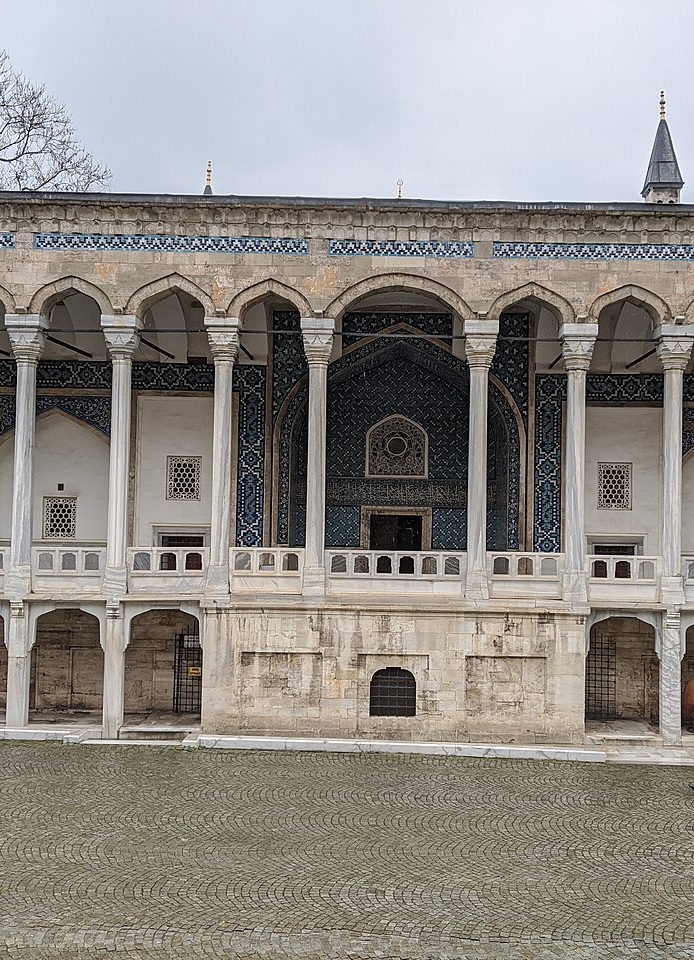
Standing as Istanbul’s oldest Ottoman civic building, the Tiled Kiosk dates back to 1472, commissioned by Sultan Mehmed the Conqueror just 19 years after his conquest of the city. This architectural gem showcases a rare blend of Timurid and Seljuk influences within Istanbul, distinguished by its magnificent iwan, or vaulted portal, and stunning tile work in shades of turquoise and lapis lazuli. Originally, this elegant structure served as a royal pavilion where the Sultan could observe jereed, traditional equestrian sports, from the expansive outer gardens of Topkapi Palace.

Architectural Innovation and Evolving Collections

The museum’s main building presented a unique engineering challenge, particularly for housing the massive, newly discovered Sidon sarcophagi. Architect Alexander Vallaury ingeniously designed the ground floor with extra-thick vaulted ceilings, heavy masonry, and wide arcades, specifically engineered to support the immense weight of these marble tombs using locally sourced Anatolian stone. Adjacent, the Ancient Orient Museum building, originally the empire's first Academy of Fine Arts founded by Osman Hamdi Bey in 1883, was structurally converted between 1917 and 1935 to accommodate the rapidly expanding archaeological collections from Mesopotamia, showcasing the empire's evolving academic and preservation priorities.

Istanbul Smart Guide

Ready to Explore Istanbul?

Download the Istanbul Smart Guide now and transform your travel experience

✨ Explore All Our Istanbul Audio Tours

Tour Route & Historical Stops (6)

Follow these stops in the Istanbul Smart Guide mobile app with offline GPS & interactive AI.

1

Welcome to the Architect's Vision

📍 Museum Entrance Courtyard.

A brief welcome and introduction to the tour.

2

The Courtyard Assembly

📍 Museum Courtyard, facing the Main Building facade.

The architectural statement of the Neoclassical facade; building a modern empire.

3

The Tiled Kiosk Exterior

📍 Museum Courtyard, facing the colonnade of the Kiosk.

The oldest Ottoman civic building (1472); Seljuk architectural influences.

4

The Vaults & Arcades

📍 Main Building, ground floor hallways.

How the building was specifically engineered around massive stone sarcophagi.

5

The Library Doors

📍 Main Building, upper floor landing.

The integration of European museum science into Ottoman culture.

6

The Ancient Orient Facade

📍 Ancient Orient Building, exterior entrance.

The repurposing of the building from an Ottoman fine arts school.

Frequently Asked Questions

What is the historical significance of the Istanbul Archaeological Museum?

The museum was founded by Osman Hamdi Bey to preserve Ottoman antiquities and introduce modern museum science to the empire, establishing a cultural institution on par with European counterparts.

Who designed the main building of the Istanbul Archaeological Museum?

The main building, with its distinctive Neoclassical facade, was designed by the French-Ottoman architect Alexander Vallaury and completed in 1891.

Can I explore the Tiled Kiosk with this audio guide?

Yes, our audio guide includes a detailed stop at the Tiled Kiosk exterior, explaining its 15th-century origins, unique Seljuk architectural influences, and its original purpose as a sultan's pavilion.

How does the audio guide enhance my visit to the museum?

Our audio guide provides rich historical context and engaging storytelling for key exhibits and architectural features, allowing you to discover the museum's secrets at your own pace and deepen your understanding of Osman Hamdi Bey’s legacy.

Istanbul Smart Guide
★★★★★ 4.8 • FREE APP • OFFLINE GPS
Hear Istanbul's Hidden Stories
Your Personal Audio Guide • 10 Languages
🎧 Download