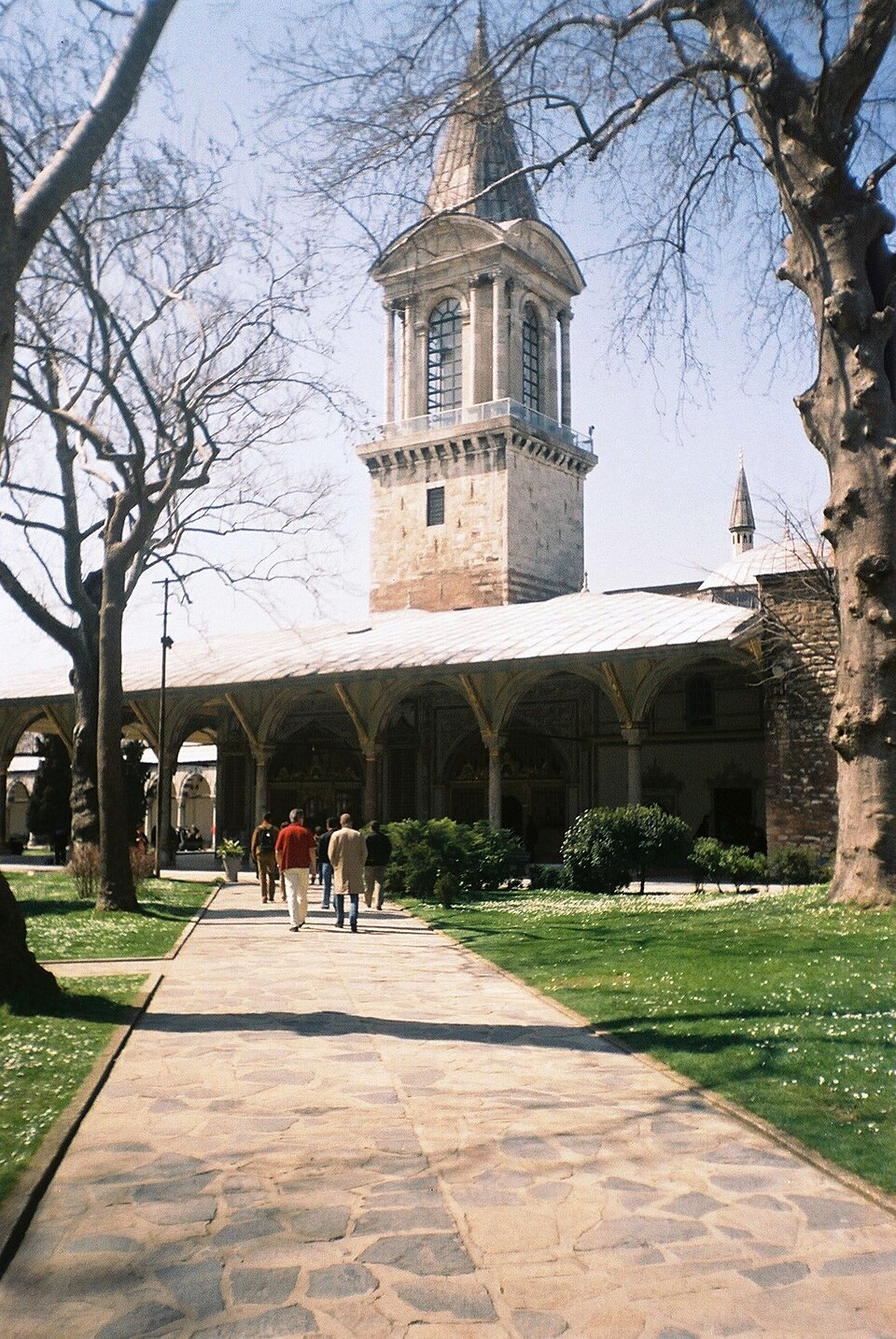
Topkapı Palace: Whispers of Sultans, Echoes of an Empire
Step across the threshold of history into Topkapı Palace, the administrative and royal heart of the Ottoman Empire for nearly 400 years. Commissioned by Sultan Mehmed the Conqueror in 1459, this sprawling complex holds secrets within its grand gates, opulent chambers, and serene gardens. Our audio guide invites you to explore the very spaces where absolute power was wielded and history shaped, from the Imperial Council to the Fourth Courtyard.
🎧 20-Second Audio Guide Preview
“Stand here, within the Audience Chamber. Imagine foreign ambassadors, gripped by guards, forbidden to meet the Sultan's gaze. Notice the indoor fountain. Its constant flow wasn't just decorative; it was an ancient anti-espionage tactic. The loud water drowned out whispers, protecting imperial secrets. What other silent defenses did the Sultans employ?”
Enter the Administrative Heart: Gates and Council
Your journey into Topkapı begins at the majestic Gate of Salutation, built under Suleiman the Magnificent in 1524. Notice its imposing octagonal towers, reflecting European castle designs. Here, silence was strictly enforced, and only the Sultan could ride through; everyone else, even the Grand Vizier, dismounted. Beyond lies the Imperial Council, or Divan-ı Hümayun, where viziers managed the empire four days a week. Look closely for the "Window of Justice," a golden grille high on the wall. From behind it, the Sultan would listen, unseen, ensuring his officials always acted as if under his watchful eye, a brilliant psychological control.
Absolute Power: Thresholds and Audiences
Pass through the Gate of Felicity (Babüssaade), a critical barrier separating the administrative outer courts from the Sultan's private inner sanctum. No one crossed this threshold without explicit permission, reinforcing the Sultan's unparalleled authority. This was the stage for grand displays of power; during coronations, holidays, or even military mutinies, the Sultan's golden throne was positioned directly here to address the masses, a potent symbol of his rule. Inside, the Audience Chamber (Arz Odası) served as a setting for calculated intimidation. Foreign ambassadors were physically restrained by guards, prohibited from making eye contact, and met amidst the deliberate sound of an indoor fountain—an ingenious anti-espionage tactic to prevent eavesdropping.
Treasures, Relics, and Panoramic Dominance
The Imperial Treasury, located in the Conqueror's Pavilion (1460), showcases the breathtaking wealth of the Ottoman Empire. Marvel at the Topkapı Dagger, adorned with three massive emeralds, infamous from a Hollywood film. Gaze upon the legendary 86-carat Spoonmaker's Diamond, a teardrop marvel among the world's largest. Next, the Chamber of Sacred Relics holds the spiritual heart of the palace. Sultan Selim I brought these sacred Islamic artifacts, including the Prophet Muhammad's mantle and swords, in 1517, claiming the Caliphate. For over 500 years, an Imam has recited the Quran here continuously. Finally, the Fourth Courtyard, a private terraced garden, offers sweeping views of the Golden Horn, Bosphorus, and Sea of Marmara, symbolizing Ottoman control over these vital waterways.
Ready to Explore Istanbul?
Download the Istanbul Smart Guide now and transform your travel experience
Follow these stops in the Istanbul Smart Guide mobile app with offline GPS & interactive AI.
1
Welcome to the Ottoman Empire
📍 Just outside the Middle Gate.
A brief welcome and introduction to the tour.
2
The Gate of Salutation
📍 Middle Gate, entrance to the Second Courtyard.
Introduction to the palace structure. Only the Sultan could ride a horse through these doors.
3
The Imperial Council
📍 Second Courtyard, left side under the Tower of Justice.
How the Ottoman Empire was governed, and the Sultan’s hidden window above the Viziers.
4
The Gate of Felicity
📍 Entrance to the Third Courtyard.
The threshold of absolute power; where the Sultan sat during coronations and rebellions.
5
The Audience Chamber
📍 Third Courtyard, directly inside the Gate of Felicity.
The intimidation tactics used on foreign ambassadors in this exact room.
6
The Imperial Treasury
📍 Third Courtyard, right side (Conqueror's Pavilion).
The sheer wealth of the empire, focusing on the Topkapı Dagger and the 86-carat diamond.
7
Chamber of Sacred Relics
📍 Third Courtyard, left rear corner.
The spiritual heart of the palace, housing the mantle and swords of the Prophet Muhammad.
8
The Fourth Courtyard
📍 Beyond the Third Courtyard, facing the sea.
The private gardens of the Sultan and the panoramic view of the Bosphorus and two continents.
Frequently Asked Questions
What are the main highlights of the Topkapı Palace tour?
The tour highlights include the Gate of Salutation, the Imperial Council's Window of Justice, the Gate of Felicity, the Audience Chamber's fountain, the Imperial Treasury with the Topkapı Dagger and Spoonmaker's Diamond, the Chamber of Sacred Relics, and the panoramic views from the Fourth Courtyard.
How did the Sultan maintain control over his viziers at Topkapı Palace?
The Sultan famously maintained control through the "Window of Justice" in the Imperial Council. He could listen to meetings unseen from behind a golden grille, ensuring viziers always behaved as if he were present, compelling their honest and diligent work.
Is the Topkapı Palace audio guide easy to use for first-time visitors?
Yes, the audio guide is designed for ease of use. It provides clear directions to each stop, enriching historical narratives, and practical tips, making your exploration of Topkapı Palace seamless and insightful.
What makes the Fourth Courtyard special?
The Fourth Courtyard was the Sultan's private terraced garden for relaxation. Its unique feature is the strategic panoramic view of the Golden Horn, Bosphorus, and Sea of Marmara, intentionally showcasing the Ottoman Empire's mastery over these crucial waterways connecting continents.