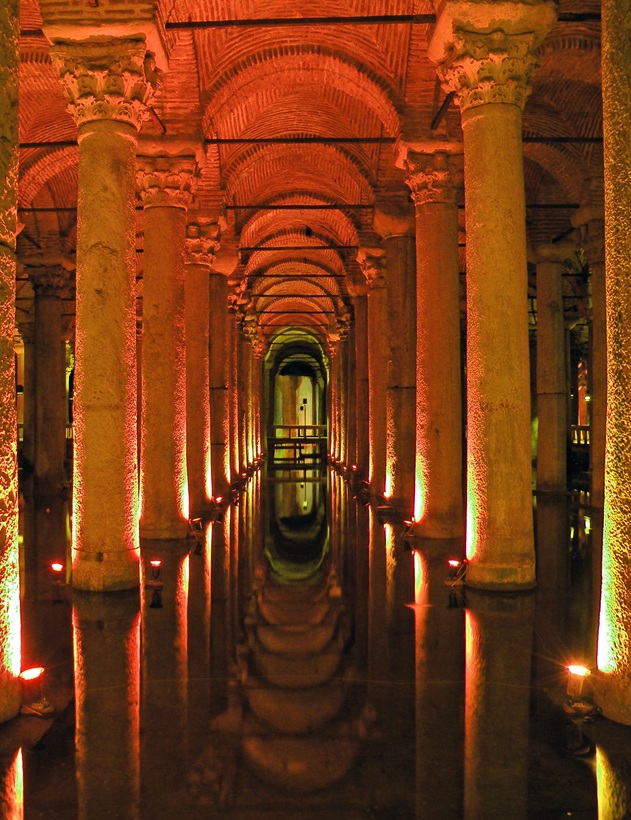
The Sunken Forest: Descend into Istanbul's Mystical Basilica Cistern
Step into a forgotten world beneath Istanbul, where history whispers from every shadow. The Basilica Cistern, or Yerebatan Sarnıcı, awaits your discovery. Built by Emperor Justinian I in 532 AD, this magnificent subterranean lake once supplied water to Constantinople's Great Palace. Prepare to navigate a forest of ancient columns, each holding centuries of untold stories and profound mysteries.
🎧 20-Second Audio Guide Preview
“Descend the 52 steps into Byzantium's hidden depths. Stand before a petrified forest of 336 ancient columns, echoing with history. Notice the unique 'Crying Column' and the enigmatic Medusa heads used as bases. What other secrets does this 'Sunken Palace' hold beneath your feet?”
Unveiling Justinian's Subterranean Palace
Descend 52 stone steps into the awe-inspiring Basilica Cistern, known locally as Yerebatan Sarnıcı. Commissioned by Byzantine Emperor Justinian I in 532 AD, this colossal structure is the largest of hundreds of ancient cisterns hidden beneath Istanbul. It was ingeniously built to store an astonishing 80,000 cubic meters of filtered water, essential for supplying the Great Palace of Constantinople and surrounding imperial buildings. As you enter, the sheer scale of this 6th-century engineering marvel becomes apparent, transporting you back to an era of Roman emperors and grand architectural ambition. It truly feels like stepping into a hidden underground world.
The Forest of Columns and Enigmatic Carvings
The Basilica Cistern presents a breathtaking "petrified forest" of exactly 336 marble columns, standing 9 meters tall and arranged in 12 precise rows. These columns, many repurposed from ancient temples, create a haunting atmosphere complemented by dim lighting and the echoing drip of water. Amongst them, discover the unique "Crying Column," often wet, with tear-shaped carvings said to mourn the thousands of slaves who perished during its construction in 532 AD. Deeper within, two massive Medusa heads serve as column bases. One is inverted, the other sideways, their origins unknown but widely believed to be from a dismantled pagan temple, adding layers of myth and intrigue to their practical placement.
Rediscovered Legends and Enduring Life
After the Ottoman conquest, the magnificent Basilica Cistern fell into obscurity, largely forgotten for centuries. Its rediscovery in 1545 by French scholar Petrus Gyllius is a fascinating tale; he learned of locals drawing fresh water, and even live fish, through holes in their basement floors. Today, ghost carp still gracefully swim in the remarkably clear water, serving as a living link to the cistern's function and rediscovery. This enduring aquatic life, alongside the subtle reflections on the water's surface, enhances the sense of timelessness. The cistern stands as a testament to Byzantine ingenuity, its cool, damp air and stunning visuals inviting quiet contemplation of Istanbul's deep historical layers.
Ready to Explore Istanbul?
Download the Istanbul Smart Guide now and transform your travel experience
Follow these stops in the Istanbul Smart Guide mobile app with offline GPS & interactive AI.
1
Welcome to the Depths
📍 Above ground, before the stairs.
A brief welcome and introduction to the tour.
2
The Descent
📍 The entrance staircase platform, looking out over the water.
Introduction to the "Sunken Palace" built by Emperor Justinian in 532 AD.
3
The Forest of Columns
📍 First section of the main wooden walkway.
The sheer scale: 336 columns holding up the city above, and the haunting atmosphere.
4
The Crying Column
📍 Midway along the path, marked by a green hue and wet surface.
The "Tear Drop" column, carved with peacock eyes to mourn the 7,000 slaves who died building it.
5
The Medusa Heads
📍 Far back left corner of the cistern, at the end of the walkway.
The mysterious upside-down and sideways Medusa heads used as column bases.
6
The Carp and the Reflection
📍 The return walkway heading toward the exit.
The surprisingly clear water, the fish that live in the dark, and how the cistern was rediscovered by locals fishing through their basement floors.
Frequently Asked Questions
What is the Basilica Cistern's original purpose?
Built by Emperor Justinian I in 532 AD, its primary purpose was to store and filter water, supplying the Great Palace of Constantinople and surrounding imperial buildings.
How many columns are inside the Basilica Cistern?
The Basilica Cistern features exactly 336 marble columns, arranged in 12 rows of 28 columns each, most standing 9 meters (30 feet) high.
What are the Medusa heads and why are they placed strangely?
The Medusa heads are ancient Gorgon sculptures used as column bases. One is sideways, the other upside down. Their strange placement was likely for practical leveling, though legend suggests it was to nullify Medusa's deadly gaze.
How does the audio guide enhance my visit to the Sunken Forest?
Our audio guide transforms your visit into an immersive storytelling experience, detailing the history of each section, from Justinian's construction to the secrets of the Crying Column and Medusa heads, all at your own pace.