Journey Through Millennia: Istanbul Archaeological Museum's Eternal Masterpieces
Step into the grand halls of the Istanbul Archaeological Museum, a testament to civilization's enduring legacy. Founded by Osman Hamdi Bey in 1891, this was the Ottoman Empire's first purpose-built museum, conceived to house unparalleled treasures. Our audio guide invites you to traverse millennia, from the earliest recorded peace treaty to the stunning artistry of Hellenistic and Babylonian empires, revealing the very foundations of human history.
🎧 20-Second Audio Guide Preview
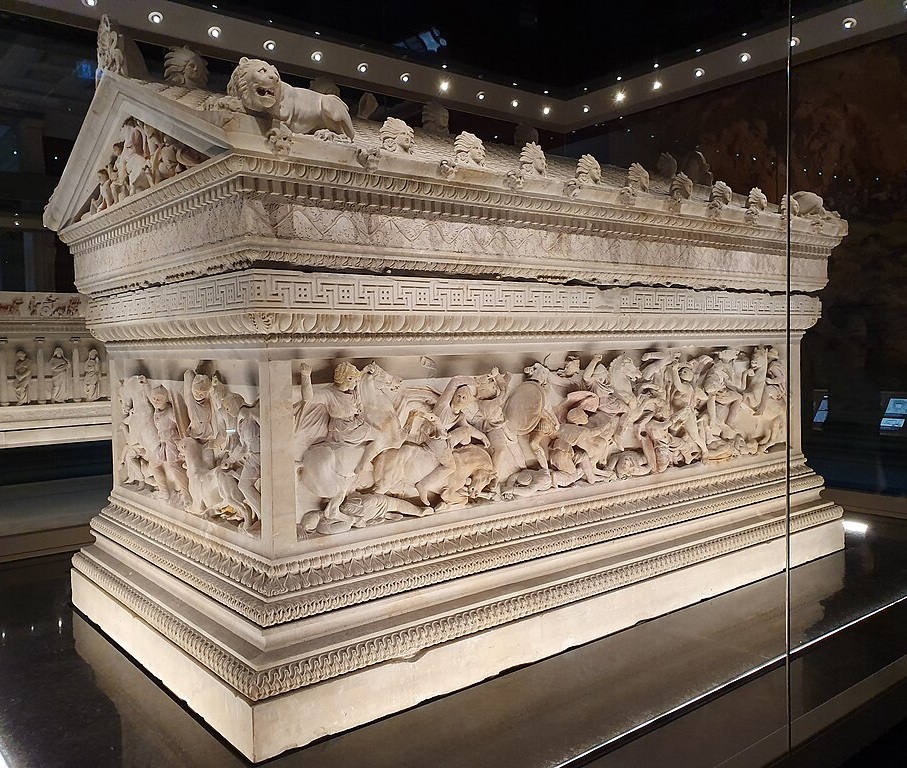
“Stand before the magnificent Alexander Sarcophagus. Look closely at the incredibly detailed carvings depicting Alexander fighting Persians. Notice the faint traces of original vibrant paint, revealing its ancient splendor. This isn't Alexander's tomb, but a masterpiece crafted for a king he appointed. What other secrets does this incredible artwork hold?”
The Birth of a Legacy: Osman Hamdi Bey's Vision
The Istanbul Archaeological Museum stands as a monumental achievement, a direct result of Osman Hamdi Bey’s visionary efforts. Founded in 1891, it was the first institution in the Ottoman Empire explicitly designed to house and display historical artifacts. Its global renown surged following Hamdi Bey’s own excavation of the Sidon Necropolis in 1887. This underground complex, discovered by a local peasant, yielded remarkably intact royal sarcophagi, including the fabled Alexander Sarcophagus. The sheer volume and importance of these finds necessitated the construction of the museum's grand Neoclassical Main Building, firmly establishing its place among the world's premier archaeological institutions and cementing its legacy.
Echoes of Empires: Treaties, Gods, and Kings
Venture into the diplomatic heart of the ancient world with the Treaty of Kadesh, signed in 1259 BC between Egyptian Pharaoh Ramses II and Hittite King Hattusili III. Unearthed in Hattusa, this cuneiform tablet, written in Akkadian, represents the world’s first recorded peace treaty—a replica even graces the United Nations today. Nearby, the majestic Ishtar Gate Panels transport you to Nebuchadnezzar II's Babylon, circa 575 BC. These original glazed terracotta bricks, once part of the Processional Way, vividly display the lion of Ishtar and the dragon of Marduk, symbols of divine protection and imperial might, offering a glimpse into a magnificent city.
Artistry Across Eras: From Protector Gods to Ottoman Walls
The museum's collection beautifully illustrates the fusion and evolution of ancient beliefs and artistry. Observe the Statue of Bes, a colossal Late 5th-century BC depiction of the Egyptian-Phoenician protector god. His unusually large size and monstrous visage belied his role as a beloved domestic deity, safeguarding families. Further on, the 2nd-century AD Roman Statue of Tyche, goddess of urban prosperity, holds her cornucopia and wears a mural crown, personifying a city's fortune. Conclude your artistic journey at the Tiled Kiosk Mihrab (1432), showcasing exquisite Karamanid ‘cuerda seca’ ceramic techniques, a magnificent pre-Iznik transition to Ottoman decorative arts within Mehmed the Conqueror's 1472 structure.
Ready to Explore Istanbul?
Download the Istanbul Smart Guide now and transform your travel experience
Follow these stops in the Istanbul Smart Guide mobile app with offline GPS & interactive AI.
1
Welcome to the Masterpieces
📍 Museum Entrance Courtyard.
A brief welcome and introduction to the tour.
2
The Statue of Bes
📍 Courtyard, directly in front of the Main Building entrance.
Introduction to the museum complex and the protector god Bes.
3
The Treaty of Kadesh
📍 Ancient Orient Building, first floor, main hall glass case.
The story of the world’s first recorded peace treaty.
4
The Ishtar Gate Panels
📍 Ancient Orient Building, main hall, mounted on the right wall.
The glazed brick lions and dragons of Nebuchadnezzar’s Babylon.
5
The Sidon Necropolis
📍 Main Building, ground floor, left wing (Hall of Sarcophagi).
The discovery of the royal tombs by Osman Hamdi Bey.
6
The Alexander Sarcophagus
📍 Main Building, ground floor, left wing, center display.
The pinnacle of Hellenistic art and the myth of Alexander's tomb.
7
The Statue of Tyche
📍 Main Building, ground floor, Roman sculpture galleries.
Roman adaptation of Greek gods and the concept of fortune.
8
The Tiled Kiosk Mihrab
📍 Tiled Kiosk Building, central domed room.
Transition to Ottoman art; the incredible Karamanid ceramic techniques.
Frequently Asked Questions
What are the absolute must-see artifacts in the Istanbul Archaeological Museum?
Key highlights include the Alexander Sarcophagus, the Treaty of Kadesh (world's first peace treaty), the Ishtar Gate Panels from Babylon, and the Statue of Bes.
Does the Alexander Sarcophagus actually contain Alexander the Great?
No, despite its name, the Alexander Sarcophagus does not contain Alexander the Great. It is believed to have been made for Abdalonymus, the King of Sidon, appointed by Alexander.
How does the audio guide enhance my visit to the museum?
Our audio guide provides deep historical context, highlights intricate details you might otherwise miss, and tells compelling stories behind each masterpiece, bringing ancient history to life.
What is the significance of the Ishtar Gate Panels in the museum?
The Ishtar Gate Panels are original glazed terracotta bricks from King Nebuchadnezzar II's Babylon (c. 575 BC). They depict the lion of Ishtar and the dragon of Marduk, representing powerful deities and imperial grandeur.