“Beyond the grand rituals, the plaza around Hagia Sophia buzzed with life—vendors, scholars, and the ulema. Discover how adjacent medreses taught ancient wisdom and soup kitchens fed the poor. Experience Bayram illuminations and unlock the full video and audio story in the Istanbul Smart Guide app.”
Unlock the full cinematic video & complete narration in the free Istanbul Smart Guide app.
Hagia Sophia in the Ottoman Zenith
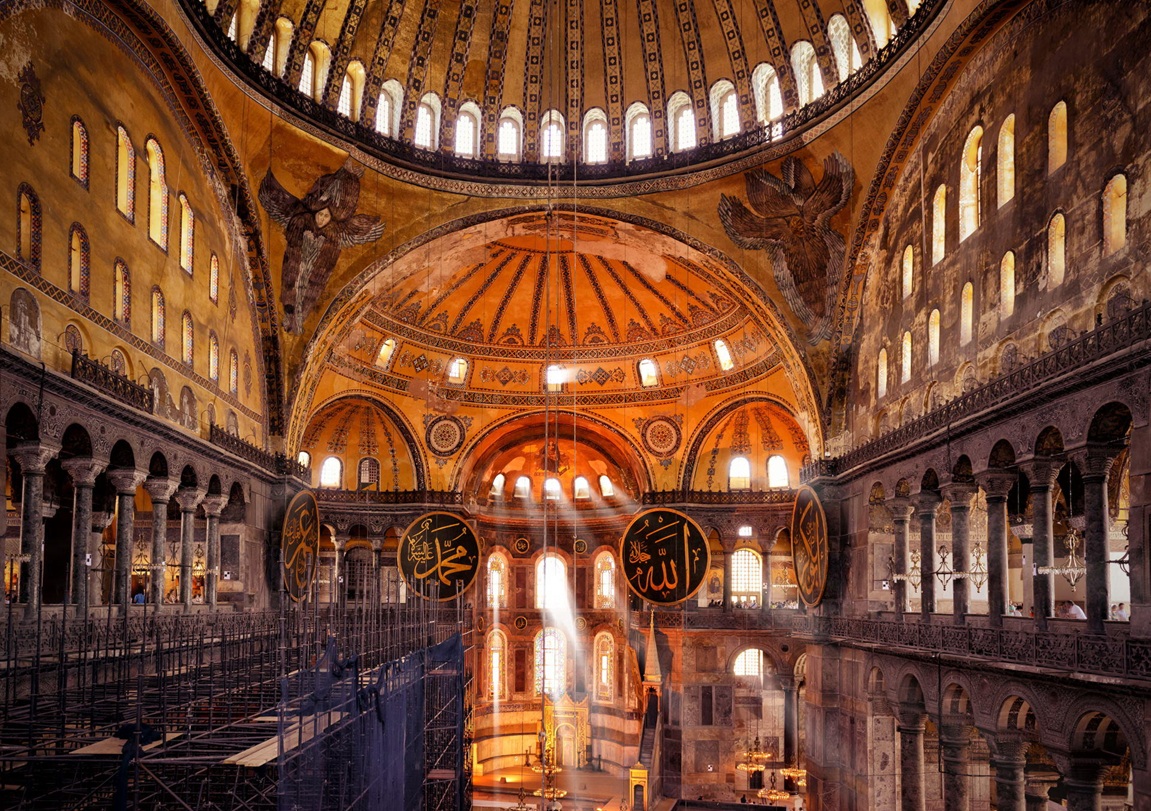
It is the early 1600s, and the heart of the Ottoman Empire beats not just in the palaces but in the domes and minarets that crown the imperial city. At the center of it all rises **Hagia Sophia**, once the cathedral of Byzantium, now the most honored mosque of the Islamic world after Mecca and Medina.
🎧 Continue Listening — Audio Teaser
“Beyond the grand rituals, the plaza around Hagia Sophia buzzed with life—vendors, scholars, and the ulema. Discover how adjacent medreses taught ancient wisdom and soup kitchens fed the poor. Experience Bayram illuminations and unlock the full video and audio story in the Istanbul Smart Guide app.”
From Cathedral to Mosque
Its conversion began with Mehmed the Conqueror in 1453. On the very day Constantinople fell, the Sultan entered Hagia Sophia on horseback, dismounted, and ordered:
the Christian mosaics covered
the altar removed
a mihrab carved into the apse
The cross fell; the crescent rose. A new chapter began.
The Age of Süleyman
By the 16th century, under Sultan Süleyman the Magnificent, Hagia Sophia was not just a mosque—it was a political statement, a symbol of divine authority transferred to the Ottomans. Mimar Sinan, the empire’s chief architect, reinforced its ancient structure and added slender minarets that pierced the skyline like arrows aimed at heaven.
The Ritual and the Power
Five times a day, muezzins climbed its minarets to call the faithful. Fridays were especially grand:
The Sultan arrived on horseback
He passed through a corridor of Janissaries and scholars
He prayed under the colossal dome
His presence was not just spiritual—it was a public display of legitimacy and divine favor.
Life Around the Mosque
Around Hagia Sophia, the plaza buzzed with life:
Water vendors
Calligraphers
Coffee sellers
Ulema and foreign envoys
The adjacent medrese (Islamic school) taught Qur’anic law, philosophy, and astronomy. The soup kitchen fed the poor—an act of imperial piety.
Bayram Illuminations
During Bayram festivities, the mosque was illuminated by mahya lights strung between its minarets. The sermons echoed with Qur’anic verses and the Sultan’s name, praised in the same breath as God’s justice.
Hagia Sophia was both a place of worship and an anchor of Ottoman identity, standing firm at the crossroads of East and West.
🔒 FULL HISTORICAL NARRATION & VIDEO
Continue Watching & Reading in the App
Scan the QR code on the Floating App Card at the bottom-right of your screen to watch the full AI historical reconstruction video and read the complete story for free.
Download the free Istanbul Smart Guide app on iOS or Android to watch the full AI historical video and read the complete story.
Mehmed the Conqueror converted Hagia Sophia in 1453. He ordered Christian mosaics covered, the altar removed, and a mihrab carved into the apse, marking its transformation from cathedral to mosque.
What was Hagia Sophia's significance under Sultan Süleyman?
Under Sultan Süleyman the Magnificent, Hagia Sophia became a powerful political statement, symbolizing divine authority transferred to the Ottomans. Mimar Sinan reinforced its structure and added iconic minarets, enhancing its imperial grandeur.
What rituals took place at Hagia Sophia during Ottoman times?
Five times daily, muezzins called the faithful to prayer. On Fridays, the Sultan arrived on horseback, passed through Janissaries, and prayed under the colossal dome, publicly displaying his legitimacy and divine favor.
What activities surrounded Hagia Sophia during the Ottoman era?
The plaza around Hagia Sophia buzzed with water vendors, calligraphers, and coffee sellers. An adjacent medrese taught Islamic law, philosophy, and astronomy, while a soup kitchen fed the poor, reflecting imperial piety.