Belle Époque Brilliance
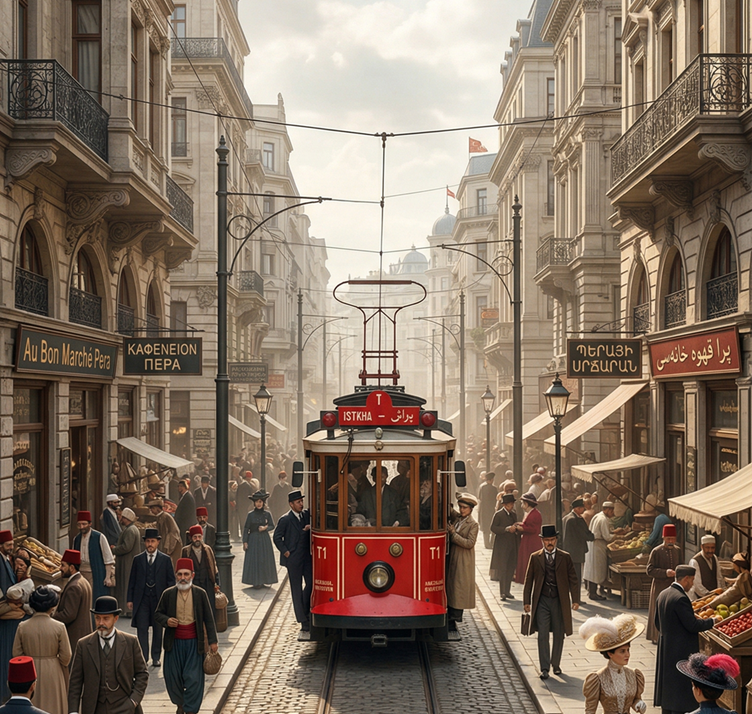
The street’s golden age came during the Belle Époque era, especially in the late 19th and early 20th centuries. Landmarks like Cercle d’Orient, Naum Theatre, and Markiz Patisserie became icons of high society. Historical passages such as Çiçek Pasajı, Hazzopulo, and Atlas Pasajı brimmed with life, hosting flower sellers, bookstores, and cafes.
War, Occupation, and Renewal
However, during the Allied occupation of Istanbul between 1918 and 1922, the street’s atmosphere shifted. Military boots replaced elegant shoes, and uncertainty loomed over once-busy theaters and clubs. But with the victory of the Turkish War of Independence led by Atatürk, the avenue was reborn. In 1923, it was renamed “İstiklal”, meaning “Independence,” to honor the nation's newfound sovereignty.
A Living Cultural Artery
Today, İstiklal is a vibrant cultural artery. Visitors can explore modern art galleries, watch indie films at Beyoğlu Cinema, admire the restored tramway, or get lost in the charm of historic passages. Street performers, bookshops, rooftop cafés, and live music venues keep its spirit alive. This avenue remains not just a thoroughfare—but a living, evolving museum of Istanbul’s layered identity.